7 Mistakes You're Making with Your Restaurant Reservation System (and How to Fix Them)
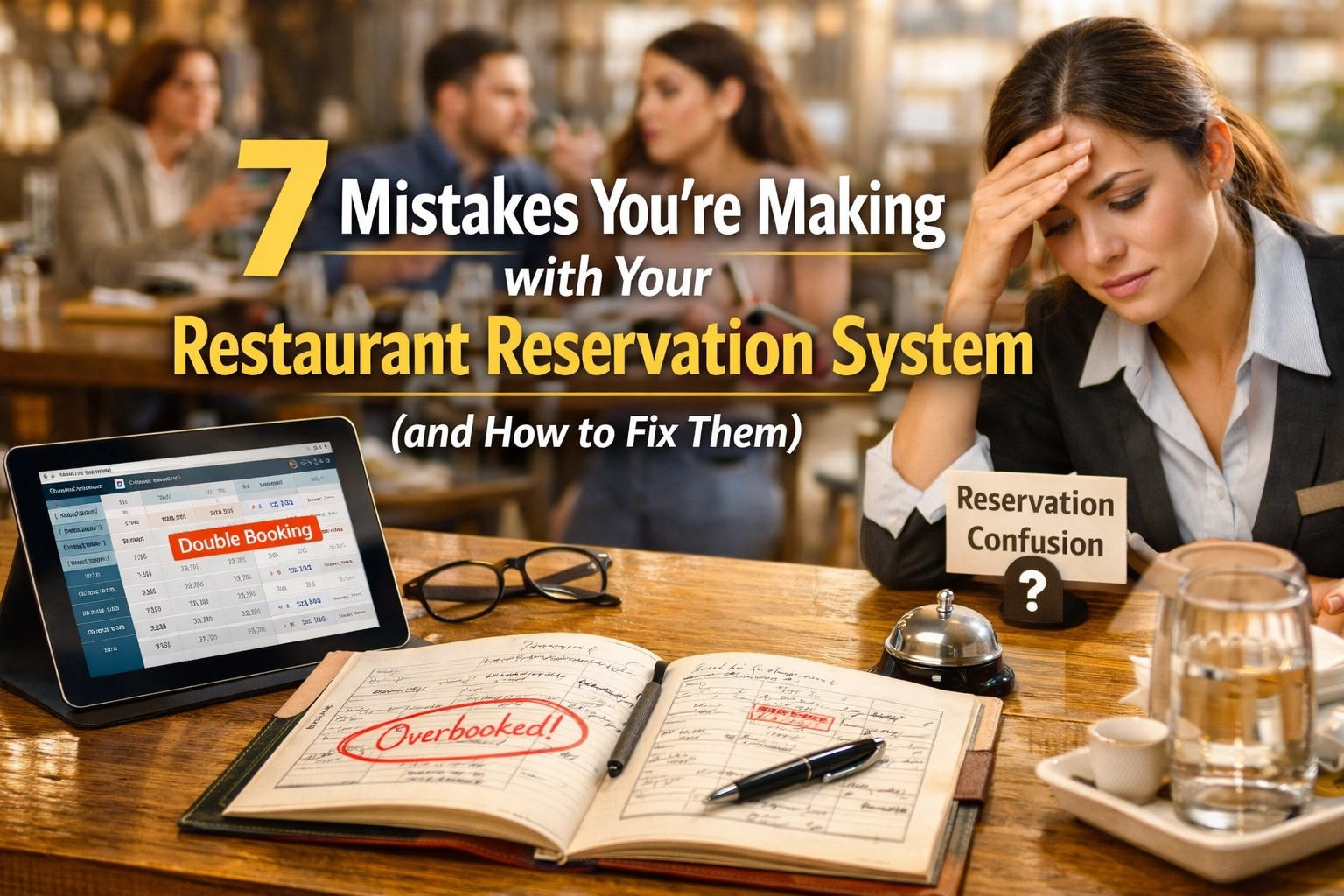
Your reservation system should be bringing diners through your door, not sending them to your competitors. Yet most restaurants are unknowingly sabotaging their bookings with avoidable mistakes that cost them revenue, damage their reputation, and frustrate both staff and guests.
Let's fix that. Here are seven critical mistakes you're probably making with your restaurant reservation system, and exactly how to solve them.
1. Your Mobile Experience Is Driving Diners Away
Here's the reality: over 70% of restaurant reservations now happen on mobile devices. If your booking system isn't optimized for smartphones, you're losing bookings every single day.
The problem shows up as tiny buttons, unreadable text, forms that don't resize properly, and checkout processes that make guests pinch and zoom their way through frustration. Most diners won't fight through a clunky mobile experience, they'll simply close the tab and book somewhere else.
The Fix: Your reservation interface needs to be responsive across every device. That means a booking flow designed specifically for thumbs and smaller screens. No redirects to desktop-only pages. No forms that require zooming. Just a seamless experience from search to confirmation, whether your guests are booking from an iPhone, Android tablet, or desktop computer.

2. Double-Bookings Are Destroying Your Reputation
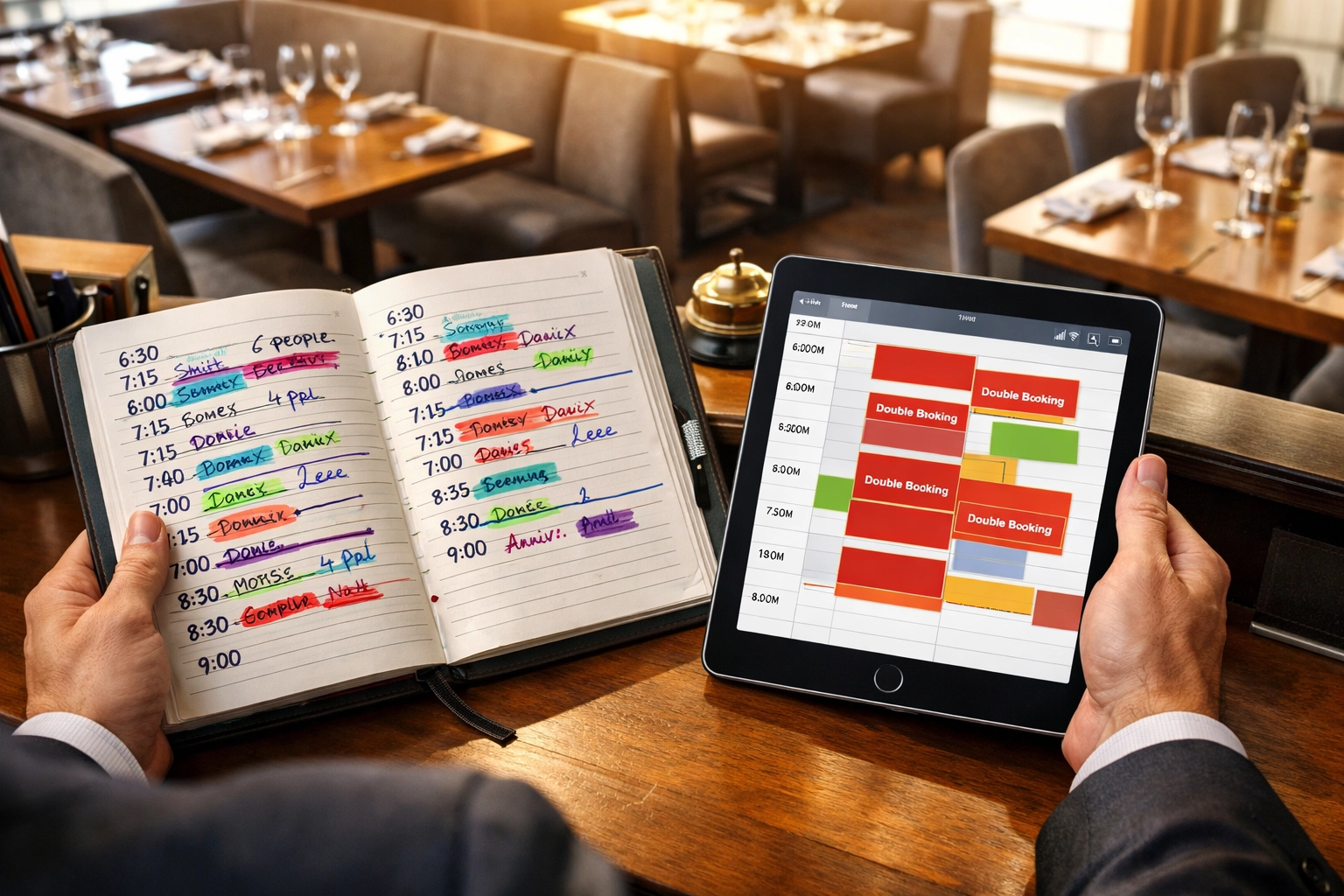
Nothing kills your restaurant's credibility faster than telling a guest who booked online that their table isn't available. Double-bookings happen when your reservation system doesn't sync in real-time, when you're manually managing both online and phone bookings, or when multiple platforms aren't talking to each other.
The result? Long wait times for guests who had confirmed reservations, scrambling staff, angry reviews, and damage that takes months to repair.
The Fix: Implement a real-time booking system that automatically updates availability across all channels the moment a reservation is made. Your online calendar should be the single source of truth, integrated with your phone bookings, walk-ins, and any third-party platforms you use. Add buffer times between reservations to account for parties that run long. Your system should make overbooking physically impossible.
3. Your Communication Game Is Costing You Diners
You confirmed a booking. Great. But did the guest receive confirmation? Do they remember their reservation time correctly? Will they show up?
Poor communication creates confusion at every stage. Guests arrive at the wrong time because they misunderstood your confirmation. They forget their booking entirely. They show up to find you've had to give away their table because you couldn't reach them when you were running behind.
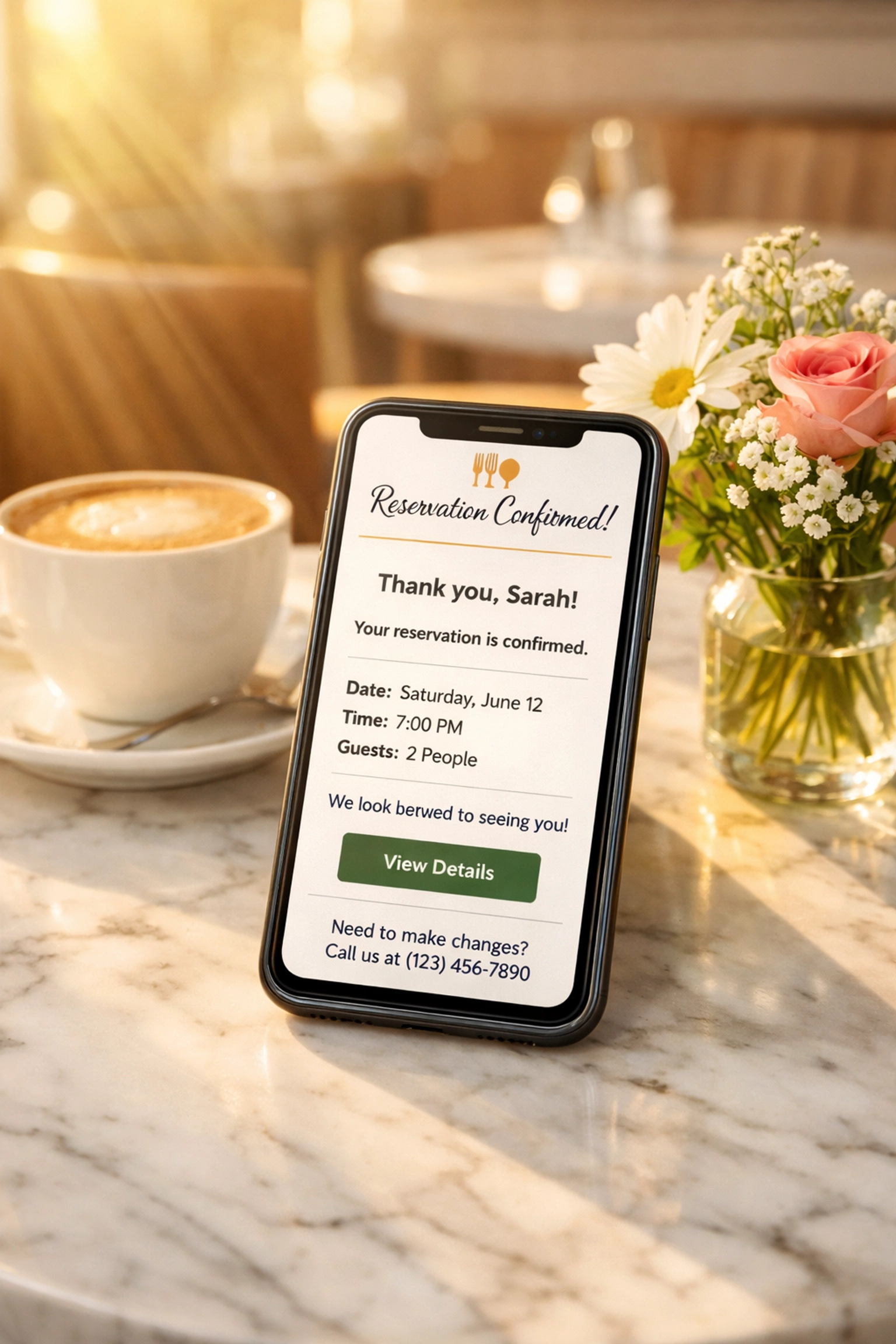
The Fix: Automate your confirmation and reminder system. Send an immediate confirmation email or text when a booking is made. Follow up with a reminder 24 hours before the reservation. Include clear details: exact date, time, party size, and how to modify or cancel if needed. Give guests a way to confirm they're still coming. This simple communication loop reduces no-shows by up to 40% and eliminates the "wait, I thought it was at 7:30" conversations.
4. Your Website Integration Is Sending Diners Elsewhere
You've invested in a beautiful website that perfectly captures your restaurant's vibe. Then guests click "Book a Table" and get redirected to a generic third-party platform that looks nothing like your brand. Or worse, they're forced to create an account on some external site just to make a reservation.
Every redirect is a chance for diners to abandon the booking. Every extra step increases drop-off rates. Every off-brand experience weakens your restaurant's identity.
The Fix: Integrate a booking widget that lives directly on your website and matches your design. Diners should be able to reserve a table without ever feeling like they've left your site. No account creation required. No jarring redirects. Just a smooth, on-brand experience from browsing your menu to confirming their reservation. A native booking solution keeps guests in your ecosystem and increases conversion rates significantly.
5. Your Booking Form Is Too Complex
Think about the last time you booked a table online. How many fields did you have to fill out? Name, email, phone number, party size, date, time, special requests, dietary restrictions, occasion, newsletter signup, marketing preferences...
Every additional field you add drops your conversion rate. Diners want to book a table in seconds, not complete a questionnaire. Complicated forms with unclear policies and confusing time slot presentations create unnecessary friction that kills bookings.
The Fix: Streamline ruthlessly. Collect only what you absolutely need: name, contact info, party size, date, and time. Make everything else optional. Present available time slots clearly and intuitively, no one wants to decode your booking calendar. Use plain language for your booking policies. The faster someone can complete their reservation, the more likely they are to follow through.
6. You're Not Sending Reminders (Or Sending Bad Ones)
No-shows cost restaurants an average of $40-$100 per reservation. That's revenue walking out the door because guests simply forgot they had a booking.
Many restaurants either don't send reminders at all, or they send them so close to the reservation time that guests can't adjust their plans. A reminder that arrives 30 minutes before a booking is useless: that table is already set, and you've already turned away other parties.
The Fix: Build an automated reminder system that works. Send confirmations immediately after booking. Send reminders 24-48 hours in advance so guests can cancel or modify if needed, giving you time to fill that table. Include a one-click confirmation option so guests can acknowledge they're still coming. Make it stupidly easy for guests to manage their reservations, and your no-show rate will drop dramatically.
7. You're Ignoring Your Reservation Data
Your booking system is generating valuable data every single day: peak dining hours, popular party sizes, booking lead times, cancellation patterns, guest preferences. Most restaurants never look at this information, missing massive opportunities to optimize operations.
You're probably overstaffed during slow periods and understaffed during rushes. You're not capitalizing on booking trends. You can't identify which marketing efforts actually drive reservations.
The Fix: Use analytics tools to track and understand your booking patterns. Identify your peak hours and days so you can staff appropriately. Notice that Fridays at 7pm book out three weeks in advance? Adjust your pricing or offers accordingly. See a lot of cancellations for Tuesday lunch? Dig into why. Data-driven decisions let you optimize table management, reduce labor costs, improve guest experience, and maximize revenue per service.
Stop Losing Bookings to Fixable Mistakes
These seven mistakes are completely avoidable. The right reservation system handles mobile optimization, prevents double-bookings, automates communications, integrates seamlessly with your website, simplifies the booking process, manages reminders, and provides actionable data: all without adding work to your plate.
Your reservation system should be your silent partner, working 24/7 to fill your tables and deliver exceptional guest experiences. Not another headache you have to manage.
Ready to fix these mistakes and take control of your reservations? Get started with Sully Booking and see how the right system transforms your booking process from frustrating to effortless.